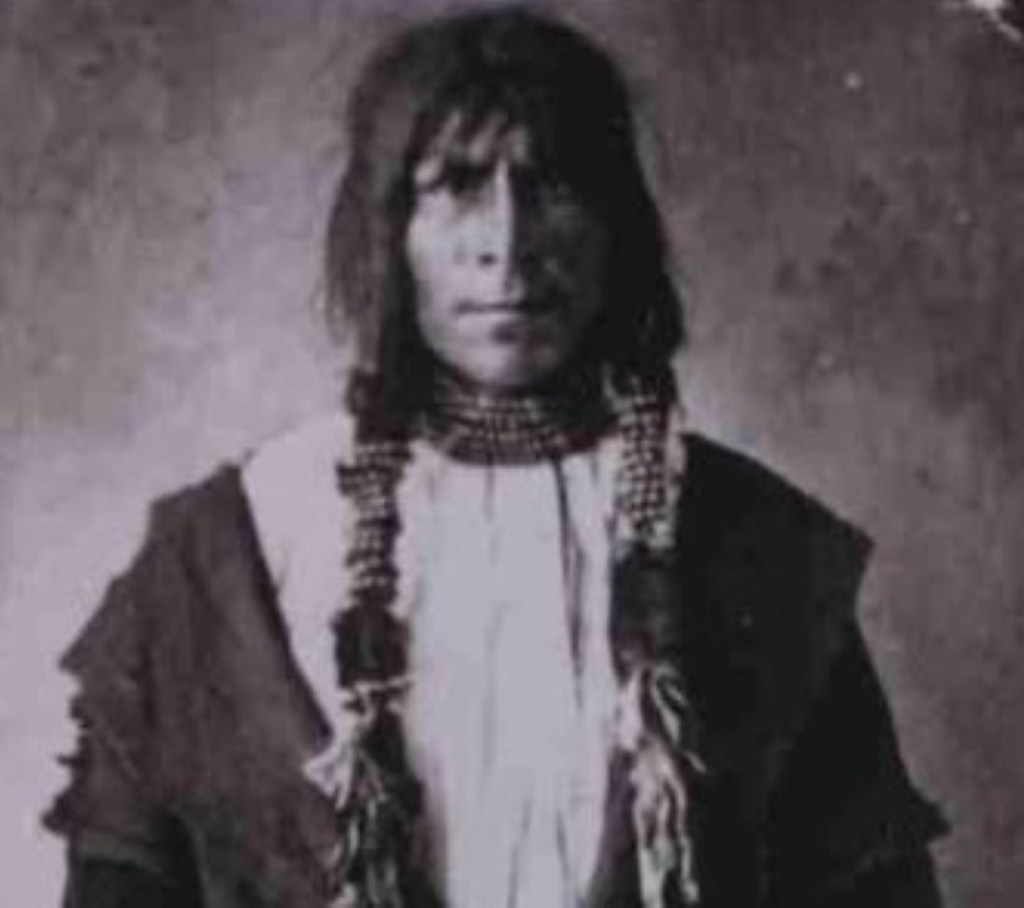
Mongols Return To Kiev (Streets of Bucha)
King Valdamar II of Denmark Sends Aid To Kiev
By Brian Howard Seibert
© Copyright by Brian Howard Seibert
Scratch a Ukraine and you’ll find a Dane,
Scratch a Russian and you’ll still only find a Mongolian.
Napoleon Bonaparte (Re-Interpreted)
On February 19th, 2024, the Kyiv Independent reported:
Denmark has decided to send its entire stock of artillery ammunition to Kyiv, Danish Prime Minister Mette Frederiksen told the Ukraine Lunch at the Munich Security Conference (17 February 2024), becoming the first to do so and appealing to other European nations to do more to help Ukraine.
“They [the Ukraines] are asking us for ammunition now. Artillery now. From the Danish side, we decided to donate our entire artillery,” Frederiksen said, speaking at the conference on Sunday.
Frederiksen added, “There is still ammunition in European stocks. This is not a question of only production because we have weapons, we have ammunition, we have air defence systems that we don’t have to use ourselves at the moment that must be handed over to Ukraine.”
Denmark has pledged €8.4 billion in military aid so far.
According to the Kiel Institute, Denmark’s military aid commitments increased by €3.5 billion since November, making it the largest military donor by percentage of GDP.
Why is Denmark the world’s staunchest supporter of Ukraine?:
Denmark is, without a doubt, the world’s staunchest supporter of Ukraine in their struggle against the illegal and immoral attack of Mad Vlad Putin and his Russian horde. And Danish royalty undoubtedly backs this support. King Valdamar II of Denmark certainly would have. I say would have because King Valdamar died in 1241 AD. But in 1240 AD he became perhaps the first Danish supporter of Kiev against another attack from the east by distant relatives of the Russians, the Mongols.
In 1240 AD, English historian Matthew Paris recorded in his Chronica Majora that:
“Rumour abounded in England that the Danes were preparing to invade
the kingdom. This did not, however, happen, for the ships loaded with
men and women were sent elsewhere in order to repopulate, cultivate
and occupy the lands that the Mongols had devastated.”
The above was his entry for 1240 AD and seems to indicate that King Valdamar ‘the Second’ had been preparing a fleet for an impending attack on England, but an event had occurred to change his plans: Kievan Hraes’ was once more under attack from the east. But this time it was the Mongols.
The Mongolian Great Golden Horde under Batu Khan, grandson of Genghis Khan, consisting of 120,000 mounted archers, crossed the Volga River and invaded Volga Bulgaria in late 1236. Within a month the Mongols conquered the Volga Bulgars, the Cumans and the Alans.
The Mongols then began their attack upon Kievan Hraes’, attacking from several directions: The city of Suzdal from the east and then Ryazan from the south. It was hard to defend against an army that broke itself into splinter groups of ten thousands and recombined effortlessly. It was hard to fully comprehend what exactly you were up against. The cities fell in days.
Having burnt down the villages of Kolomna and Moscow, the horde laid siege to the city of Vladimir on the 4th of February 1238. Three days later, the capital of Vladimir-Suzdal Province was taken and burnt to the ground. The royal family perished in the fire, while the grand prince retreated northward. Crossing the Volga, Prince Vladimir mustered a new army, which was encircled and totally annihilated by the Mongols in the Battle of the Sit River on the 4th of March.
Wiki goes on:
“Thereupon Batu Khan divided his army into smaller units, which ransacked fourteen cities of northeastern Rus’: Rostov, Uglich, Yaroslavl, Kostroma, Kashin, Ksnyatin, Gorodets, Galich, Pereslavl-Zalessky, Yuryev-Polsky, Dmitrov, Volokolamsk, Tver, and Torzhok. Chinese siege engines were used by the Mongols under Tolui to raze the walls of many cities. The most difficult to take was the small town of Kozelsk, whose boy-prince Vasily, son of Titus Mstislavich, and inhabitants resisted the Mongols for seven weeks, killing 4,000. Major principalities and urban centres which escaped destruction or suffered little to no damage from the Mongol invasion included Novgorod, Pskov, Smolensk, Polotsk, Vitebsk, and probably Rostov. The Mongols planned to advance on Novgorod, but the principality was spared the fate of its brethren by the decision to pre-emptively surrender. In mid-1238, Batu Khan devastated the Crimea and pacified Mordovia. In the winter of 1239, he sacked Chernigov (just north of Kiev) and then Pereyaslavl.”
The Danish fleet sent east by King Valdamar ‘the Second’ would have likely arrived in Kiev during the early summer of 1240. Their aid would have undoubtedly been welcomed by the ‘Swift Danes’ of Kievan Hraes’. But the fresh Danes of Zealand would hardly have known what a maelstrom they were sailing into…when their ships arrived at the keys of Kiev, the Mongols were in the south, destroying the Pechenegs and sending embassies to the kingdoms of Hungary and Poland, demanding their surrender or complete annihilation. The 30,000 people of the city of Chernigov had suffered thus after refusing to surrender, and it was likely the city of Chernigov that the fresh Danes had been sent by King Valdamar to repopulate.
The Danish fleet may have consisted of up to a hundred ships, and the 5,000 or so Danes on board would have been Latin Christians, not the Orthodox Christians of Kievan Hraes. Gone were the days of Pagan Scandinavia, when King Frodi of Denmark had raised an army of up to 80,000 men to defeat the 100,000 man army of the Hunnish Khazars in 841 AD. The new Orthodox Christian Kievan Hraes’ was fragmented under many disparate leaders, all the numerous offspring of the 700 wives of Grand Prince Valdamar ‘the Great’ of Kiev, who had parcelled out his rule of Kievan Hraes’ to his sons when he left to conquer England as King Canute ‘the Great’ in 1015 AD. And now the Christian kings of Scandinavia could only muster this one fleet that King Valdamar had built to attack England once more, just as his namesake had done 225 years earlier, a fleet repurposed to rebuild Kievan Hraes’.
Wiki adds: “While Kiev and its grand prince was still formally acknowledged as senior amongst the principalities of Rus’, frequent internecine dynastic feuding among rival claimants had left the city weakened. Indeed, by the time Kiev was encircled by the Mongols, the head of the city’s defenses owed allegiance to Prince Daniel of the Principality of Galicia–Volhynia. Prince Daniel had taken Kiev under his protection the previous year by arrangement with Prince Michael of Kiev, who fled after originally resisting the Mongols, then losing to them his stronghold of Chernigov.”
When Monke Khan laid siege upon Kiev with his scout army of 10,000, a Mongol tumen, the situation in Kiev was defensible. But when the 100,000 man army under Batu Khan joined them in the siege of the 50,000 citizens of Kiev, then, suddenly, it was not. Within nine days, Kiev fell, on December 6th, 1240 AD. The citizens of Kiev were slaughtered. All men, women and children were annihilated by the Mongols as an example for Hungary and Poland of what becomes of those who do not surrender. But a few thousand were allowed to survive to repopulate Kiev. And the church of St. Sophia was left standing, perhaps to be converted to a Latin Christian edifice in which Catholic Danes of Zealand would worship their Latin Christian god. This would serve to illustrate the mercy the Mongols might have for the Latin Christian Hungarians and Poles that chose surrender over battle.
Six years later, one Giovanni da Pian del Carpine, an ambassador of Pope Innocent IV, passed through Kiev and said, “They [the Mongols] attacked Rus’, where they made great havoc, destroying cities and fortresses and slaughtering men; and they laid siege to Kiev, the capital of Rus’; after they had besieged the city for a long time, they took it and put the inhabitants to death. When we were journeying through that land we came across countless skulls and bones of dead men lying about on the ground. Kiev had been a very large and thickly populated city, but now it has been reduced almost to nothing, for there are at the present time scarce two hundred houses there and the inhabitants are kept in complete slavery.”
Perhaps the Ambassador of the Pope visited Kiev to see for himself the Latin Christian survivors of the Siege of Kiev. He would never have been able to identify them in his report as being Latin Christians, surrounded, as they were, by a sea of Pagans and Orthodoxy.
The aftermath of the Mongol invasion on the various provinces of Kievan Hraes’ was very disparate. Cities such as Kiev and Chernigov took centuries to rebuild, while the Province of Novgorod remained a trading center, and a newcomer, the Principality of Moscow, began to flourish under the Mongols. Moscow’s eventual dominance over Kievan Hraes’ was in large part attributable to the Mongols. Moscow drew people and wealth, developed trade links, and established an autocratic political system which exerted a powerful influence on Russian society. After the Prince of Tver led an uprising in 1327, the rival Prince Ivan I of Moscow joined the Mongols in crushing Tver and devastating its lands. By doing so, he eliminated his rival, allowed the Russian Orthodox Church to move its headquarters to Moscow, and was granted the title of Grand Prince by the Mongols.
As such, the Muscovite Russian Prince became the chief intermediary between the Mongol overlords and the Kievan Hraes’ princes, which paid further dividends for Moscow’s rulers. In the 14th century, the Muscovite princes began “gathering Hraes’ lands” to increase Russian population and wealth. While the Mongols often raided other territories, they tended to respect the lands controlled by their principal collaborator. This, in turn, attracted nobles and their servants who sought to settle in the relatively secure and peaceful lands of Moscow. Although a Hraes’ army defeated the Golden Horde at the Battle of Kulikovo in 1380, the Mongol domination of Hraes’-inhabited territories, with the requisite demands of tribute, continued until the Great Stand on the Ugra River in 1480 (Thank you Wiki).
Many Russian noble families traced their descent from the Mongols (Tatars or Tartars), including Veliaminov-Zernov, Godunov, Arseniev, Bakhmetev, Bulgakov (descendants of Bulgak) and Chaadaev (descendants of Genghis Khan’s son Chagatai Khan). In a survey of Russian noble families of the 17th century, over 15% of them had Mongol origins.
And thus is based Napoleon’s original quote, “Scratch a Russian and you’ll find a Tartar.”
ACCORDING TO SAXO: DENMARK FOUNDED KIEVAN HRAES’
Denmark’s notably outstanding support for Ukraine may be due to the fact that Denmark was the original founder of Kievan Hraes’, as can be found in ‘The Nine Books of the Danish History of Saxo Grammaticus’ aka “Gesta Danorum’ written circa 1200 AD by the Danish cleric Saxo Grammaticus. As can be interpreted from Saxo’s work:
1. King Ragnar ‘Lothbrok’ Sigurdson of Zealand, Denmark sailed with his fleet east across the Baltic and south into Scythia where he conquered a King Daxo of Dacia and established a trading empire with the Greek Romans of Constantinople [circa 800 AD].
2. King Fridleif ‘the Swift’ of Jutland, Denmark attacked Ragnar Lothbrok and drove him from Denmark into Stavanger, Norway, then took over Ragnar’s Dan’Par trade route, but was killed by his own Anglish Danes for fleeing from battle with King Charlemagne of Frankia, an act that earned him the byname ‘the Swift’.
3. His son, King Frodi ‘the Peaceful’ of Zealand and Jutland, took over rule of Denmark and married a Hunnish Princess Hanund of Khazaria in order to consolidate his hold over the Dan’Par or Dan’Way trade route to Constantinople.
4. King Ragnar ‘Lothbrok’ of Stavanger established a new northern trade route to Constantinople and he called it the Nor’Way. He also drove King AElla out of York, in Anglish Britain and called it Jorvik-‘the City of the Boar’ as revenge against the Anglish Danes of Jutland. He left his older sons to rule over Jorvik, Angleland and settled down as King of Stavanger with Princess Aslaug ‘Kraka’ and her younger sons Princes Roller and Erik in Norway.
5. But in Saxo’s Book 5 [circa 828 AD] Princes Roller and Erik came up with a plan of their own to avenge their father. They both pledged allegiance to King Gotar of ‘the Vik’ and sailed off to Liere in Zealand, planning to infiltrate King Frodi’s court in order to kill him. But both young men end up falling in love with Frodi’s sister, Princess Gunwar, and things get very dangerous in the court of the king, as Erik proves that Queen Hanund has been unfaithful to her king, and Frodi sends her back to her father, King Hunn of Khazaria, unbeknownst to all, in a very pregnant state. Events transpire, driving the Dan’Par trade route forward into a richness that firmly establishes the Danish gains in Kiev into a commercial empire that morphs into the state of Kievan Hraes’, culminating in the famous ‘Battle of the Goths and the Huns’ [circa 841 AD]. This was the first time that Kievan Hraes’ [Ukraine] was attacked by Huns from the east and was supported by, first and foremost, Danes and Scandinavians from the west.
6. Theories are established that Prince Helgi ‘Arrow Odd’ Erikson [by Princess Gunwar ‘the Fair’ Fridleifsdottir] was also Prince Oleg of Kiev [circa 848 – 912 AD].
7. From Saxo’s Book 6, research is established that Prince Ivar (Eyfur) ‘the Boneless’ Erikson [by Princess Eyfura Frodisdottir] was actually Prince Igor of Kiev [circa 912 – 945 AD], who revisited the west and reconquered Denmark in the name of his grandfather, King Frodi, taking the name of King Harde Knute (Hard Knot) and establishing the line of Knotling kings. It is this Prince Eyfur that is the legendary Prince Ivar ‘the Boneless’, who fought legless while being borne about on a shield.
8. Theories are established that Prince Svein ‘the Old’ Ivarson, also known as Prince Sviatoslav ‘the Brave’ of Kiev [circa 945 – 972 AD], also revisited the west and took back Denmark from his nephew Harald ‘Bluetooth’ Gormson and ruled as King Sweyn ‘Forkbeard’ Ivarson of Denmark and England [circa 976 – 1015 AD].
9. Further theories are established that Grand Prince Valdamar (Vladimir) ‘the Great’ of Kiev [circa 972 – 1015 AD] returned to the west as King Canute ‘the Great’ and reconquered and ruled England [circa 1016 – 1035 AD] as well as adding Denmark and Norway to his Great Northern Empire. Note that Prince Valdamar was the namesake of a whole line of Danish Valdemarian kings from Valdemar I of the twelfth century to Valdemar IV of the fourteenth.
ACCORDING TO DUDO OF ST. QUENTIN: KIEVAN HRAES’ WAS FOUNDED BY DANES
According to the near contemporary Dudo of St. Quentin, writer of ‘Gesta Normannorum’, Kievan Hraes’ was founded by Danes :
“[Chapter] 5 Rollo is expelled from his native Dacia by an evil king”
“But in the region of Dacia there was, in those days, a certain old man [King Ragnar ‘Lothbrok’], most opulent with an abundance of all goods, and surrounded on all sides by a crowd of innumerable warriors, a man who never lowered the nape of his neck before any king, nor placed his hands in anyone else’s hands in committing himself to service. Holding almost the entire realm of Dacia, he claimed for himself the lands bordering on Dacia [Romania] and Alania [Scythia], and by force and power he subjugated the populace to himself through very many battles. For, of all the easterners, he was the mightiest due to his superior strength and the most distinguished due to his cumulated surplus of all the virtues. But when he died, his two sons, vigorous in arms, well-versed in warfare, in body most fair, in spirit most hardy, survived him. Truly the older of them was called Rollo [King Roller Ragnarson], but the other, the younger, Gurim [Prince Erik ‘Bragi the Old’ Ragnarson].”
Dudo’s chronicle goes on to tell us how the evil King of Dacia [King Frodi ‘the Peaceful’ of Denmark] drove Duke Rollo out of Dacia [Kievan Hraes’] and Rollo fled to Scania [Norway] and then onward to Frankia where he carved out his own Duchy of Normandy. Perhaps this is how Rollo earned his byname ‘the Walker’, a more polite version of ‘the Swift’.
HOW THE FOURTH CRUSADE SAVED ALL OF EUROPE:
In 1203 a crusader army set out from Normandy and Flanders and on April 12th of 1204 these sons of sons of Ragnar Lothbrok sacked the City of Constantinople and established a Latin Christian Empire by making Prince Baldwin of Flanders the Emperor of the Eastern Roman Empire. Emperor Baldwin I did not rule for long, dying after capture in late 1205. Henry of Flanders took over and was followed by Peter of Courtenay, followed by his widow, Yolanda of Flanders and then by her son, Robert of Courtenay, followed by John of Brienne. In 1237 Baldwin II of Courtenay, became the only Latin emperor born in Constantinople and, as the Mongol threat began to materialize from the east Baldwin headed west to garner more troops from France and Normandy and Flanders. He returned via Germany, Hungary and Bulgaria at the head of a considerable army of 700 knights and 30,000 foot-soldiers. After Kiev had fallen in 1240, Batu Khan shifted his attacks on Hungary and Bulgaria and then in 1242 upon Constantinople.
An anonymous Austrian Chronicle is the only primary source that describes a Mongol raid into the Latin Empire:
“Tatars and Cumans, meeting no resistance or opposition, withdrew from Hungary with an endless booty of gold and silver, garments and animals, leading many captives of both sexes to the scandal of the Christians. Entering Greece, they depopulated the entire land except for the castles and well-fortified cities. But the king of Constantinople, named Baldwin, went out in battle against them, at first he was victorious, but the second time he was defeated by them.”
This is not much to go on considering that it was a very large Mongol attack upon a very famous Eastern Roman Empire, but perhaps history repeats itself. The Romans often declared, “Learn your history, lest you be doomed to repeat it!” and from the paucity of facts there appears to have been very little history learned at this particular time.
Three Centuries Earlier: The EASTERN ROMAN EMPIRE Circa 969 AD:
News had come to Captain Biorn of the Kievan Hraes’ that a Roman army was approaching from the south, so, he took his mobile legion and his twenty thousand Pecheneg mounted warriors and they rode south to meet it, leaving Count Vladimir and his Wallachian legion in control of Philippopolis. The Hraes’ army came up against the Roman army at a narrow defile north of Arcadiopolis and the battle there was documented by the Roman historian Leo ‘the Deacon’:
“Emperor John chose Magistros Bardas Skleros, the brother of his deceased wife Maria, an energetic and extremely powerful man, and he chose Patrikios Peter, who had been appointed Stratopedarches by the former Emperor Nikephoros because of his inherent valour and heroic feats in battle, to lead the army of the Romans against the Hraes’ invading forces. As soon as Magistros Bardas learned of their approach, since he was an extremely brave and active man, and at that time was incited by anger and a surge of strength, he assembled the picked men with him, and urged them to engage the enemy. He summoned John Alakas and sent him out as a scout to observe the Hraes’ and Scythians (Pechenegs), estimate the size of the host, and see where they were camped and what they were doing. He was then to send him a full report as quickly as possible, so that he might prepare and deploy the army for battle. Taking the picked men who were following him, John rode off quickly toward the Scythians; and the next day he sent a message to the magistros, urging him to come with the army, for the Scythians were encamped, not far away, but very nearby. When Bardas Skleros heard the message, he deployed the army in three sections, ordering one to follow him in the van, the others to lie in wait in the thickets on either side. They were to sally forth from their places of ambush only once they’d heard the trumpet sound the call to battle. After giving these orders to the captains, he marched straight against the Scythians, fighting valiantly. The enemy army had superior numbers, over thirty thousand, while the men following the magistros, including those lying in ambush, did not come to more than ten thousand. When the battle began, the mightiest men fell on both sides. It is said that here one of the Scythians, who boasted of his courage and the size of his body, drew ahead of his unit, rode out and attacked Bardas in the van, striking him with his sword on the helmet; but the sword blow was in vain since the blade was deflected by the helmet, glancing off to the side as a result of its resistance. Then Patrikios Constantine, Bardas’s brother, whose face was just sprouting its first growth of down, but who had an enormous body, with irresistible and invincible strength, drew his sword and went to strike the Scythian. The latter, however, perceived his assault, and avoided the blow by bending back toward the haunches of his horse. The horse received the blow on its neck, which was cut through; and the Scythian tumbled down together with his horse and was slain by Constantine.”
Captain Biorn had halted his Hraes’ legion before it entered the valley, sensing a trap, but he could not stop the Pechenegs, who, upon seeing the Roman cavalry, rushed forward to attack. But Biorn could see that the Roman force was a legion of cataphracts, that were heavily armed and armoured and he knew that the light horse of the Pechenegs could not stand up to a frontal assault by such heavy horse. The Pechenegs were skirmishers who won by encircling and attacking enemy weak points. Biorn wanted to lead his Hraes’ legion to help them, but most of his force of ten thousand were foot soldiers on horseback and only a minor portion were experienced heavy cavalry so, he set up his foot across the small valley in three ranks behind their kite shields wielding long lances that kept any cavalry at bay and he kept his heavy cavalry and spare horses at the ready behind them.
“As the course of the battle was turning this way and that, with frequent and indecisive shifts of the scale in both directions (here the Romans feigned retreats to draw the Pechenegs further into the narrow valley), Bardas ordered the call to battle to sound, and the drums to roll continuously. At the signal the army (hidden cataphracts) sallied forth from the places of ambush, and appeared to the rear of the Scythians, who were struck with terror and turned to flight. The rout had not fully developed, when one of the prominent Scythians, distinguished from the others by the size of his body and the gleam of his armour, went around the battlefield, encouraging his companions to fight bravely. Bardas Skleros rode out on his horse and struck him on the head. The sword went right through to his waist-guard, neither his helmet nor his breastplate being strong enough to withstand the strength of his arm or the slash of his sword. When he was cut in two and dashed to the ground, the Romans shouted for joy and were encouraged to brave deeds, while the Scythians, terrified by the novel and extraordinary blow, broke their close formation with lamentation, and turned to flight. The Romans pursued them until late in the evening, slaughtering them mercilessly. Fifty-five Romans are said to have died in this battle, many were wounded, and most of the horses were slain, while more than twenty thousand Scythians (Pechenegs) were killed. This was the final outcome of the Romans’ struggle with the Scythians at that time.”
When Prince Svein ‘the Old’ returned to Bulgaria from Tmutorokan, he learned that his Pecheneg allies had been slaughtered by the Romans, but Captain Biorn had held his ground against the cataphracts and they had no choice but to return to Constantinople. And when he returned to Philippopolis he learned that Count Vladimir had impaled twenty thousand Roman citizens of the city in retaliation for the slaughter of the twenty thousand Pechenegs by cowardly ambuscade. The Roman Princess Sviataslava threatened to kill the count herself and Prince Svein had to hold her back from doing just that so, Count Vladimir ‘the Impaler’ of Wallachia took his ten thousand foot soldiers and marched them all the way back to Ramnic after telling Svein that if he fought the Romans using Roman tactics, he would lose.
The LATIN EASTERN ROMAN EMPIRE Circa 1242 AD:
So, gauging from the much better documented attack of a Pecheneg army of horse mounted archers in 969 AD, this is what may have occurred with the much more poorly documented attack of a Mongol army of horse mounted archers in 1242 AD:
As had happened with the Mongol attack upon Kiev in 1240, the Mongol attack upon Constantinople was initiated by a ten thousand strong scout army led, once again, by Mongke Khan. After the fall of Bulgaria, Monke led his scout army south into a mountain pass north of Thrace and was met there by Emperor Baldwin who had 700 heavily armed and armoured Norman knights as well as thirty thousand foot-soldiers. Baldwin used his foot to seal the Mongol scout army in the long narrow defile and then charged Mongke’s Mongol light horse archers with his Norman heavy horse who were well versed in the new assault techniques of the couched lance and the Mongols never really had a chance. Charge after charge of heavily armoured horse through light horse decimated the scout army, the much vaunted Turkish recurve bow unable to penetrate the heavy head to toe armour of the Norman knights. Emperor Baldwin graciously offered Mongke Khan and his few thousand remaining horse terms and Mongke returned to Bulgaria in defeat. Baldwin knew that Batu Khan was waiting there with the 100,000 man main Mongol army, so a few thousand more or less would not affect the future outcome of the invasion. But there were only seven mountain passes through which an army could travel to attack the Latin Eastern Roman Empire and Baldwin still had 693 Norman knights after slaughtering 7,000 Mongol horse. The Emperor did the math and a hundred knights with proper foot support could hold a pass, each defile becoming a potential Thermopylae, where 300 heavily armed and armoured Spartans held off a million man Persian army.
This was the first battle that Baldwin won. Now for the one he may have lost:
This was not the first time that the Normans or the Eastern Romans had fought battle in the mountain passes of Bulgaria. Byzantine Emperor Nikephoros I died in 811 AD when his legions were trapped in a Bulgarian mountain pass and annihilated by Khan Krum and his Balkan Bulgars at the Battle of Pliska. The Khan had the emperor’s skull turned into a silver encrusted drinking goblet or kapala. This historical event may have led to the Hraes’ Primary Chronicle tale of the skull of Prince Svyatoslav ‘the Brave’ of Kiev being made into a wine cup by the Pecheneg Khan Kurya in 972 AD. The Kievan Hraes’ Chronicle was heavily reconstructed from Byzantine sources. But it was the failure of Sviatoslav’s Hraes’ forces to defend the mountain passes of Bulgaria from Roman attack that supposedly led to the prince’s death at the Ford of Vrar on the Dnieper River while his doppelganger, Sveinald, or Svein ‘the Old’, made good his escape back to Kiev.
The Norman knights may have battled with the Mongols for many months in the passes of Bulgaria, nobody knows for sure, but there were rumours of Emperor Baldwin being captured in battle and Emperor Baldwin being killed in battle and yet he survived and returned to Constantinople after Khan Batu and his main army had to withdraw from Bulgaria to attend to the death of the Great Khan in Mongolia. Later, Emperor Baldwin sent an embassy to Karakorum to make peace with Khan Batu, as did everybody else of that time, including the Pope. Only the wind whistling through the Bulgarian mountain passes knows how many battles Baldwin may have won or lost over that summer of 1242, and the wind’s not talking. But the heavy horse of the invincible Norman knights may have put the fear of god into the Mongol Golden Horde sweeping across the Asian plain. With the anonymous Austrian Chronicle as the only primary source describing the Mongol raid into the Latin Empire, we can only assume that Emperor Baldwin and his Norman knights survived their encounters with the Mongols in the mountain passes of Bulgaria, since Baldwin made it back to Constantinople and the Mongols did not. The grandsons of Ragnar ‘Lothbrok’, the sons of Rollo, the Danes of Normandy, put a stop to the expanding Mongol Empire.
Still, it would be over two centuries before the Kievan Hraes’ would completely throw off the Mongol yoke, only to wear the Moskva Russ Mongol-like yoke. The 15% Mongol blood that the Moskva Russ got while bending over for Batu Khan made that yoke harder to bear. But the Kievan Hraes’ bore that yoke through the centuries, through the Russian created Holodomor Starvation of the 1930’s that cost Ukraine over 6,000,000 human lives for which the Moskva Russ paid naught, and now through the present despicable and illegal attack of Mad Vlad Putin and his Russian Horde of this very day!
Today, modern Ukraines have some Viking (Danish) DNA due to the historical presence of Viking traders and warriors, known as the Hraes’, who established Kievan Hraes’ and intermingled with local populations. This genetic influence, alongside Slavic, East Eurasian, and Central European lineages, contributes to the complex and layered European genetic heritage found in many Ukraines, particularly in the northern and central regions.
And yes, many modern Russian populations contain minor traces of genetic influence from Mongolic and Central Asian peoples, though this impact is generally low and varies by region. This influence stems from centuries of interaction, particularly during the Golden Horde period and subsequent migrations and settlements. The presence of this Asian ancestry is more pronounced in northern and northeastern regions of Russia, and among certain ethnic minorities within Russia, such as the Buryats.
Let there be a just peace between Ukraine and Russia, but a peace fostered by the rightful application of law against all war crimes and human rights violations of the Russian individuals responsible for them, and let Ukraine take its rightful place in the European Union and may Russia take its deserving place among the Mongols of Asia.
Thank you Denmark for your staunch support of Ukraine!
And thank you Denmark for founding the Sovereign State of Kievan Hraes’, Ukraine!
Slava Ukrain !!!
Heroiam Slava !!!
*** THE END ***